--- THE MIRAGE OF CEUTA ---
as heard on Gilles Peterson’s World Wide FM and BBC Radio 6 Music
In 2024, Paul Giess, Randi Pontoppidan, and Jamaaladeen Tacuma traveled to Essaouira, Morocco, for a residency curated by Tacuma — drawing on separate collaborations with each, Tacuma sensed a kindred musical language among them. Made possible by the Third Way Cultural Alliance, what emerged from spontaneous creative sessions and encounters with local musicians became The Mirage of Ceuta — a collage of sound layered into a dreamscape. A conversation between cultures built on common ground and productive tension. The guembri's ancient blues lineage echoes throughout, connecting Moroccan ritual to the blues tradition, a reminder that these worlds are not as distant as they appear.
The album features distinct characters: Randi Pontoppidan as your mystical guide, speaking things unsaid in invented vernaculars, leading through the dreamscape. Jamaaladeen Tacuma as the cultural translator, playfully moving through the medina, bridging the guembri's ancient blues to contemporary jazz. Paul Giess as the dream interpreter, a member of the caravan and in conversation with each voice throughout. Mohammed Wakrim as the kind craftsman plays and sings traditional Moroccan music with his guembri. Miriam Bouzid appears as the soul of the guembri. In the end, Giess's role as producer became a binding force, shaping the collage pieces into a singular, cohesive picture.
The album contains proximity and contrast between raw and processed, ritual and contemporary, desert and dream. Telling its own story through collage — but also through mirage, where unlike elements blur and dissolve into one another, asking the listener to complete the image. Sameness and difference held in a singularity.
For Paul Giess, the trip carried its own quiet weight. Tacuma's invitation was not just an affirmation of Paul's work but also an open door to engage with Moroccan culture and with it a new world of creativity. Essaouira during the Gnaoua Festival had a feeling all of its own, a secret cultural refuge, one Paul knew would feel like a dream years later. Each night held a jam session at La Mama's with local musicians eagerly ushering him onstage at the sight of him. During the day Paul worked on recording for Tacuma's music and prepping for a performance at the Timitar Festival, where he played with Jamaal's Groove à la Maroc along with Omar Mesa, Nizar Dahami, Aziz Ozouss, and Mehdi Qamoum. An invitation from Paul's new friend Mohamed Wakrim to a gnawa lila offered a glimpse into the ritual at the center of gnawa music — a deeper understanding of the spiritual and trance nature of the music, a creative renewal that's stayed with him since. It was the first outing for his purple pocket trumpet, purchased at Tacuma's suggestion, and dubbed a "nomad's instrument" by locals — forever linked to that place and that moment.
Release Dates - June 26th - Pre order start - Medina Mystique single - July 24th - The Kind Craftsman Appears - August 21st - Once Inside
Sept 18th - Full Album Release
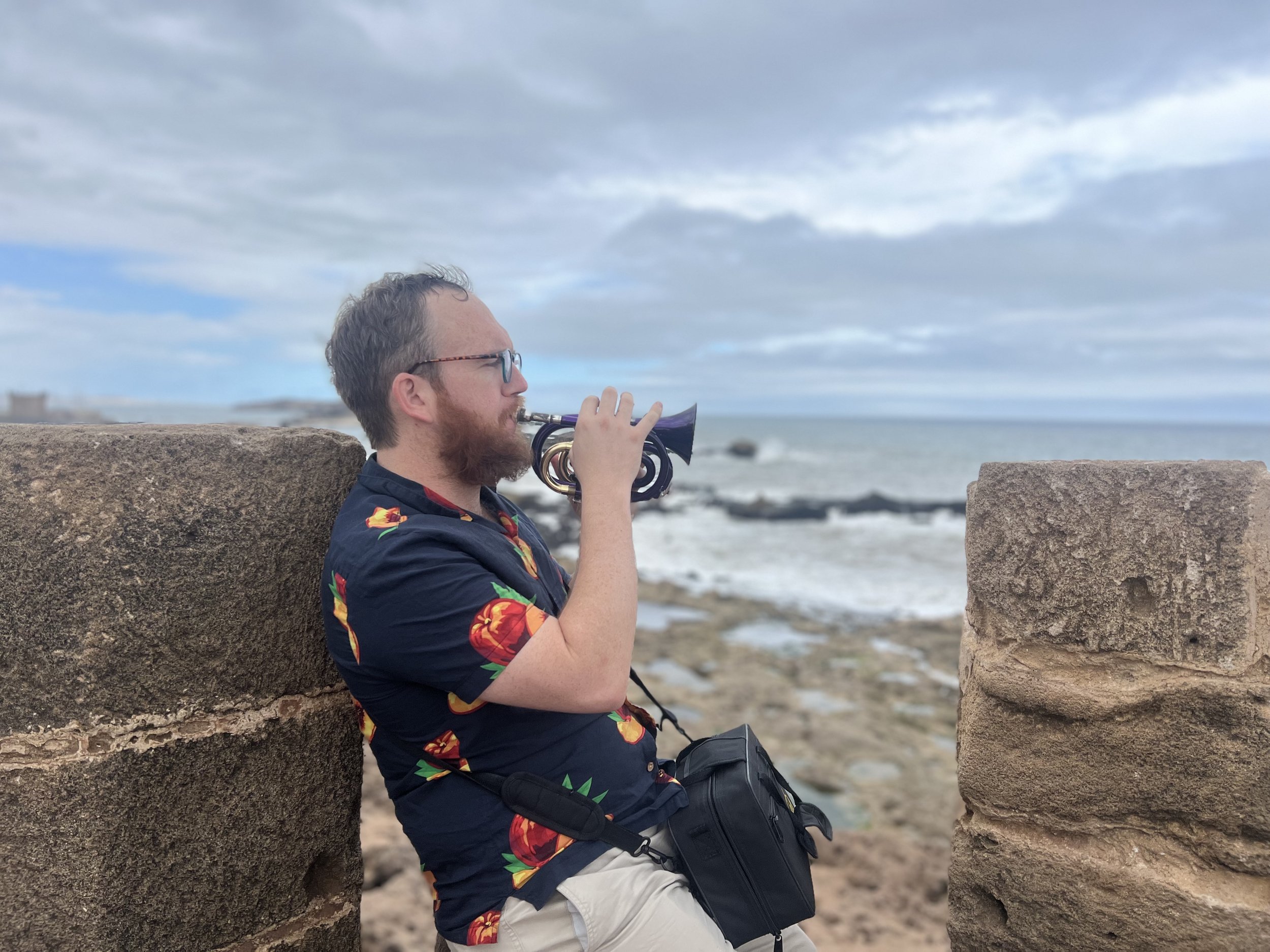
Paul Giess is a Philadelphia-based trumpeter, producer, and sound designer whose work moves fluidly between jazz, experimental electronics, and global music traditions. Described by Downbeat Magazine as delivering "lyrical, highly expressive trumpet work," Giess has built a reputation as a versatile and adventurous collaborator across multiple continents.
Giess appeared on Tacuma's album The Lighthouse alongside Odean Pope, Grant Calvin Weston, and Marc Cary; performed with Groove ala Maroc at the Timitar Festival in Agadir, Morocco; and joined the Solar System Boogie Band at the Lancaster Ave Jazz Festival in Philadelphia. That same year, Giess traveled to Essaouira, Morocco for a recording residency that produced The Mirage of Ceuta, a cross-cultural album with Tacuma, vocalist Randi Pontoppidan, and Moroccan collaborators.
As a leader, his discography includes Hymns Vol. 1 (Ropeadope Records) and the ongoing project Untethered — featured as Bandcamp Album of the Day for Grasping for the Moon (reviewed by Peter Margasak) — an electroacoustic collective exploring spontaneous creative composition with veteran drummer Grant Calvin Weston, guitarist Lee Clarke, and bassist Timothy Ragsdale among others.
Giess received the 2018 McKnight Visiting Composer Residency from the American Composers Forum, and his compositions were featured in the WHYY podcast Philadelphia Revealed. His collaboration with Philadelphia Poet Laureate and Pew Fellow Yolanda Wisher produced Nature Gurl, blending poetry, funk, and experimental sound. Other collaborators include filmmaker Aidan Un, and fellow musicians Kendrah Butler-Waters, Guthrie Ramsey, and Kimpedro Rodriguez. His music has been featured on WRTI, WXPN, Chaotic Good Jazz, and Twisted Soul Music in London
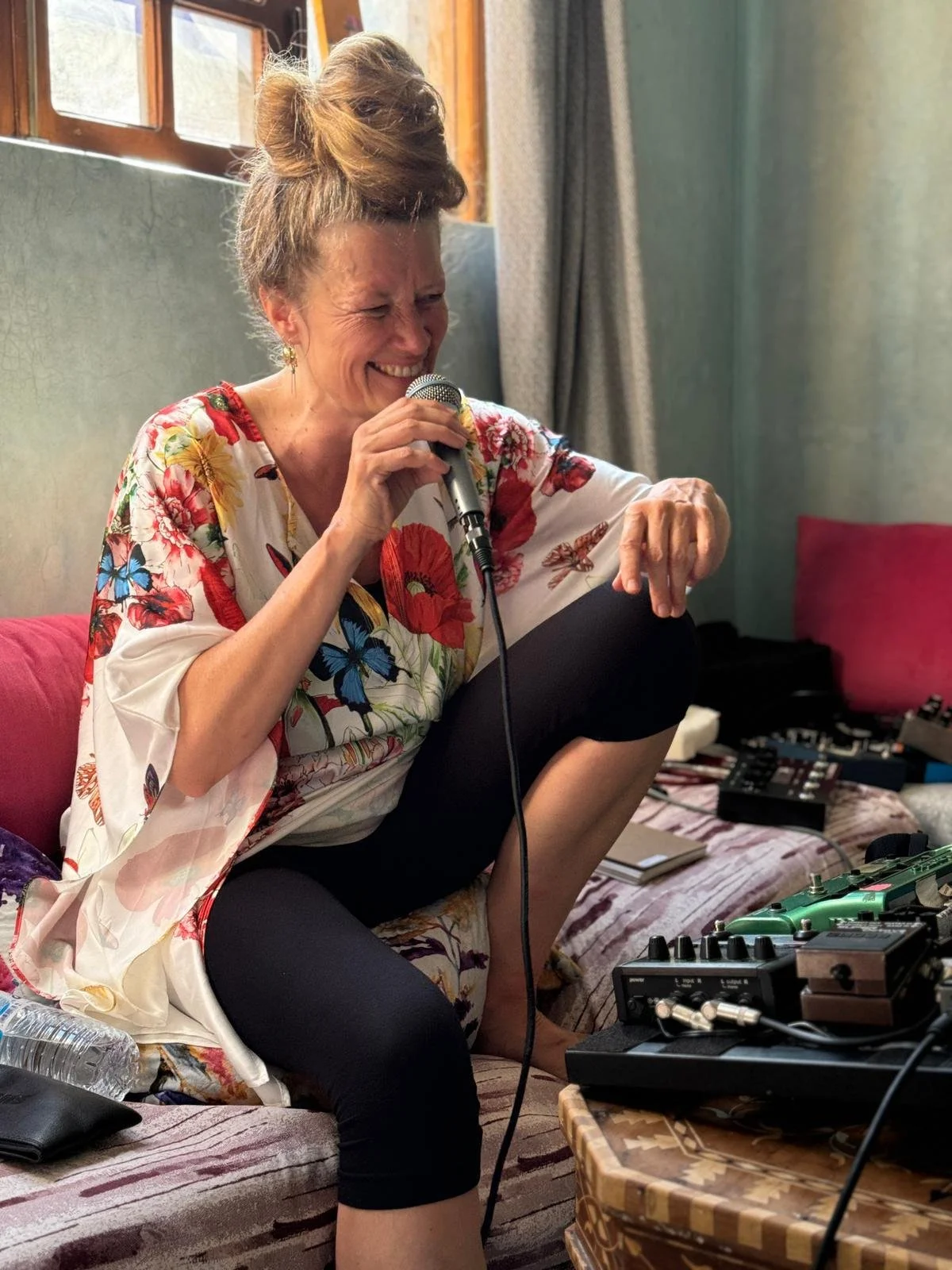
Randi Pontoppidan is an internationally active composer, vocalist, and performer working across free improvisation, jazz, performance art, electroacoustic composition, and contemporary music. Her artistic practice centers on the human voice as physical presence, expressive material, and site of exploration, often unfolding in real time through extended vocal techniques and live electronic processing. Trained in both jazz and classical singing, she moves fluidly between traditions, developing a personal sonic language that resists fixed genre classification.
In 2022, she was nominated for Danish Music Awards Jazz, Vocal Album of the Year for Life in Life. In 2021, she received a nomination for DMA Jazz, Album of the Year for Inner Lift, and in 2020 she was nominated for the Steppeulven (Danish Critics’ Award) as Vocalist of the Year.
Pontoppidan has long-standing collaborations with artists including Sissel Vera Pettersen, Greg Cohen, Joëlle Léandre, Thomas Agergaard, Marilyn Mazur, Peter Bruun, Simon Toldam, and poet Morten Søndergaard. She is a member of the vocal ensemble IKI, the musician collective Damkapellet, and Paul Hillier’s ensemble Theatre of Voices.
Pontoppidan has performed at venues and festivals including Royal Albert Hall, Carnegie Hall, Schindler’s Factory in Kraków, Roskilde Festival and Banco Nacional de Colombia in Bogotá.
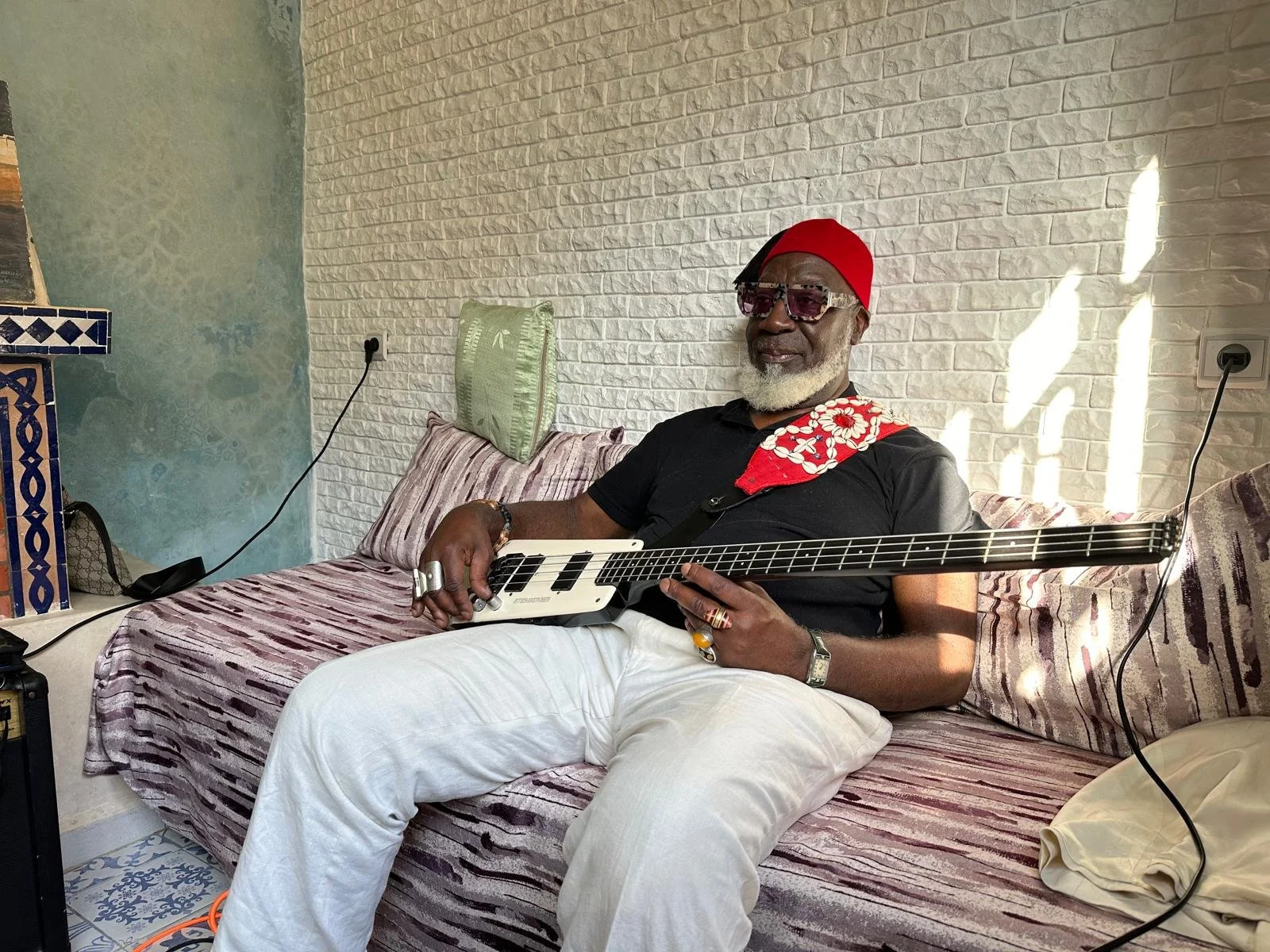
Jamaaladeen Tacuma is one of the most distinctive and adventurous bassists in contemporary music. A Philadelphia native, he first gained international attention as a member of Ornette Coleman's electric band Prime Time, but his vision has always extended far beyond any single lineage.
From the beginning, Tacuma has operated at the intersection of jazz, funk, groove, and global music traditions. His collaborations span Jeff Beck, Carlos Santana, Marc Ribot, Bob Weir, Stevie Nicks, the World Saxophone Quartet, and poets Amiri Baraka and Jayne Cortez.
Morocco has become a central creative destination. His For the Love of Ornette (2010) honored Coleman's own cross-cultural investigations, and over the years that followed he built deep partnerships with some of the tradition's most important figures — Maalem Hassan Boussou (2016), Maalem Said Bouhilmas (2022), and Majid Bekkas, with whom he had worked as a sideman across European stages since 2010 before Sons D'Hiver finally gave them the platform to lead a project together in 2026.
That relationship with Traditional Moroccan Music deepened into a full recording. His 2017 album with Binat Gania — featuring Meryam Gania on guembri, the Gania and Outanine families on vocals and krakeb, Samir Langus on sintir, DJ King Britt on electronics, Herve Samb and Rick Iannacone on guitar, Wolfgang Puschnig on hojak, and Ahmad Compaoré on drums — brought ancient Gnawa repertoire into direct dialogue with his production instincts in funk and groove. In Tacuma's own words: "Long live Gnawa."
His ongoing project Groove ala Maroc continues that conversation, placing American jazz-funk alongside Rebab, Guembri, and Gnawa percussion in a multigenerational collaboration built for both the dance floor and the spirit.
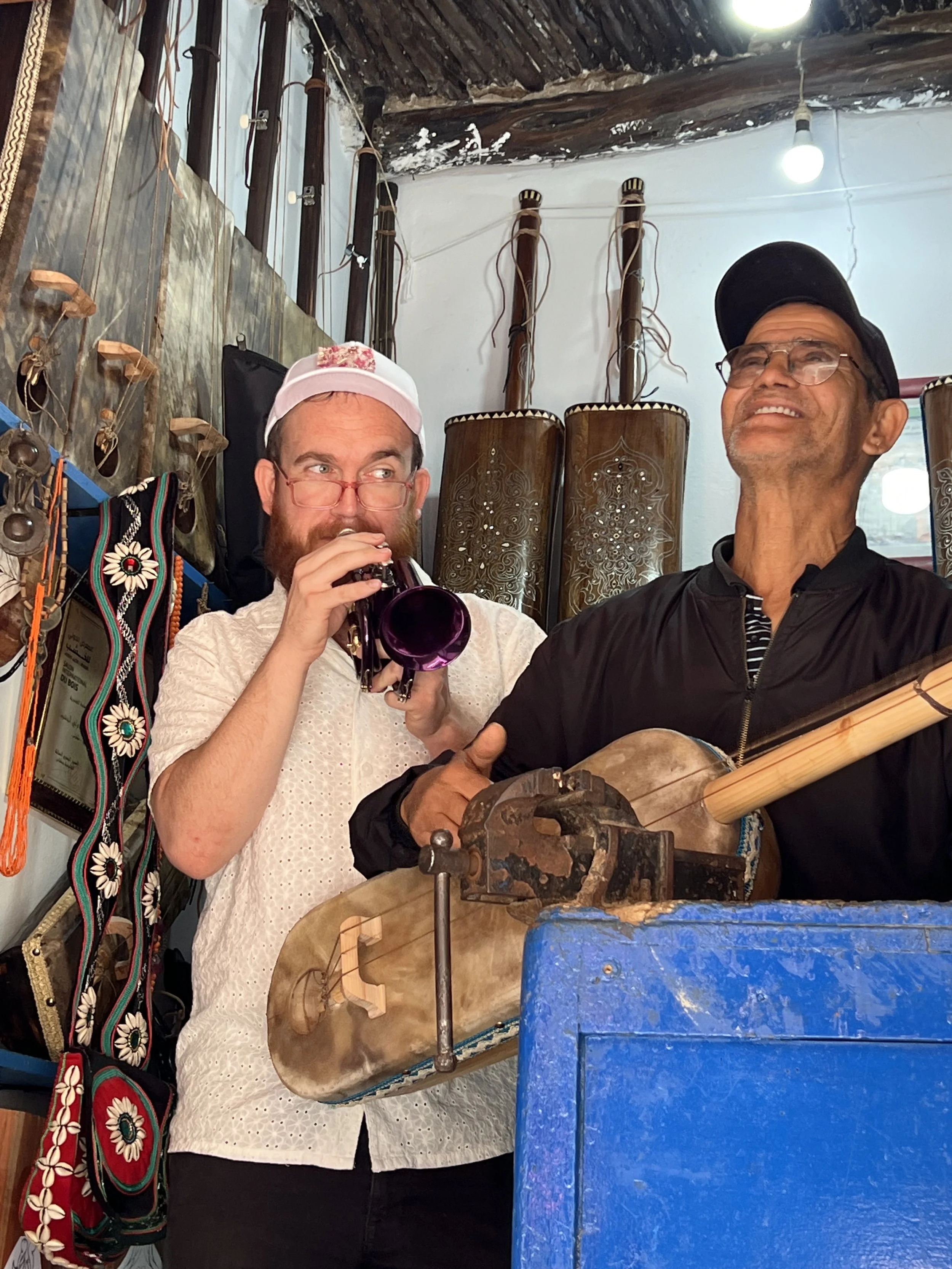
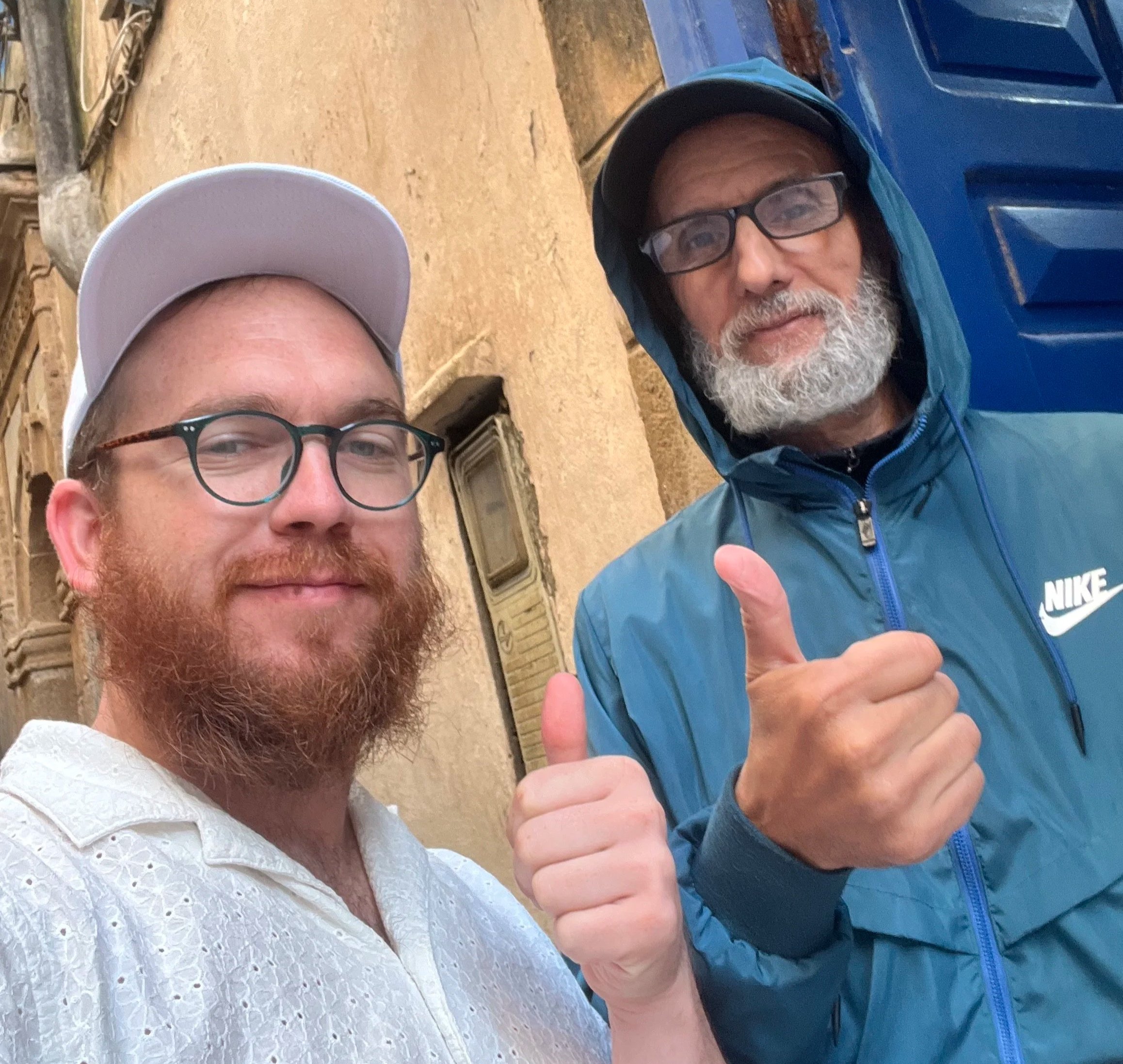
Mohamed Wakrim a master guembri craftsman and musician living in Essaouira. Mohamed sells instruments out of a small shop under the riad (traditional Moroccan house) that Paul and Randi stayed in. Despite Paul and Mohamed playing music quite a bit that week in Essaouira, they don’t share any spoken language, so instead they laughed a lot about their inability to talk to each and occasionally spoke to each other through a translator. Mohamed called himself Paul’s “Maalem” a teacher in gnawa music. Mohamed’s work has been recognized by the King of Morocco.
Mohamed was joyfully playing music as Paul first entered the riad. Paul rushed inside to throw his bags down and grab his trumpet to go make new friends and make music.
Mariam Bouzid is a mother of 2 and aspires to have her musical talents recognized more broadly. She recorded with Paul after receiving Mohamed Wakrim’s support in the endeavor. Mariam’s experience recording for and hearing her singing on this album inspired her to purchase a new guembri, reigniting her love for music. Mariam’s early musical memories include her imitating the Canadian Vocalist, Garou. Mariam primarily plays music in private, and occasionally posts clips on social media.
Mariam requested not to have her picture publicized citing as it might cause members of her family to be upset.
Notes from Mariam - “I sold my first gembri because I was going through a depression... and I didn't have the money to buy another one... so I would go to Mohammed's to play his instruments for a little while, then I'd go home empty-handed... and one day you, Paul, saved me from the depression, you held my hand, you gave me a new gembri, and I regained my self-confidence! Thank you, Paul.”
“The soul of the Gembri is a spirit that resonates through every corner of the city of Essaouira. Me, Mariam Bouzid, I have been one of its echoes since my early childhood, a breath that never ceases to reverberate. At last, the Gembri arrives with its extraordinary world, filled with mystery and liberation at the same time. Yet, you will need several keys to unlock its miraculous doors. Paul reaches out his hand and offers me this magical instrument! From that moment on, the canvas of my life begins to fill with every kind of beautiful color, opening the way to boundless imagination. But where does this instrument come from? Its source is so warm and welcoming that you can hardly imagine it. Mohamed Wakrim, the kind craftsman loved by all people of good heart. And thanks to his great hospitality, you will cherish spiritually unforgettable moments forever!”
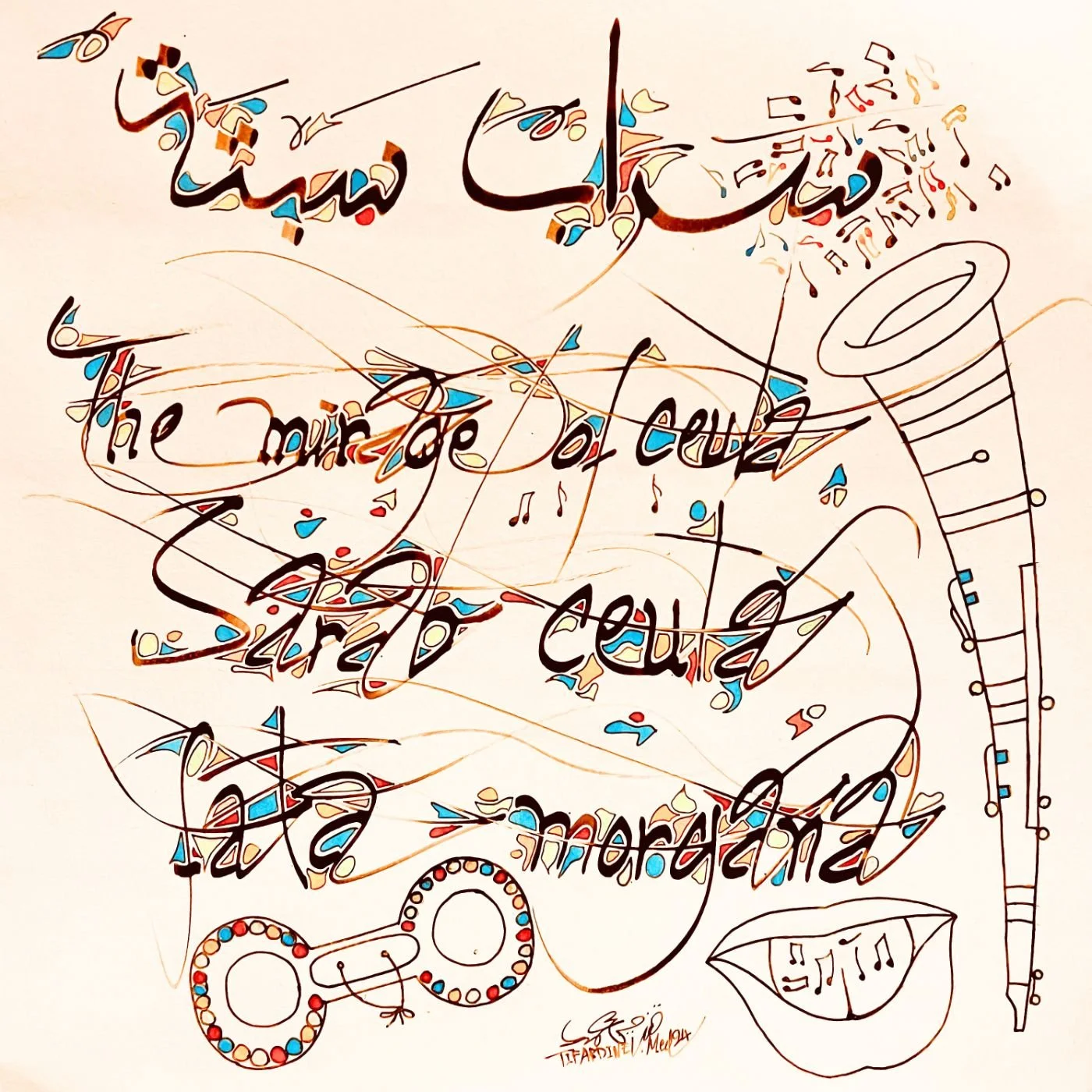
(album art)
Mohammed Tifardine is a master calligrapher and painter born in 1960 in Essaouira, Morocco. Mohammed Tifardine's Freestyle Font calligraphy, where abstract strokes reveal unseen depths of wisdom, has made him the defining artistic voice of his city. After a brief period in Marrakech studying history, he dedicated himself entirely to his art, returning to work from a small atelier deep in the medina. For over three decades he has practiced the art of interlaced Arabic letterforms, spanning themes from Quranic verse to Voltaire, always rendered in Arabic script. His exhibitions have reached France, Australia, and Thailand.
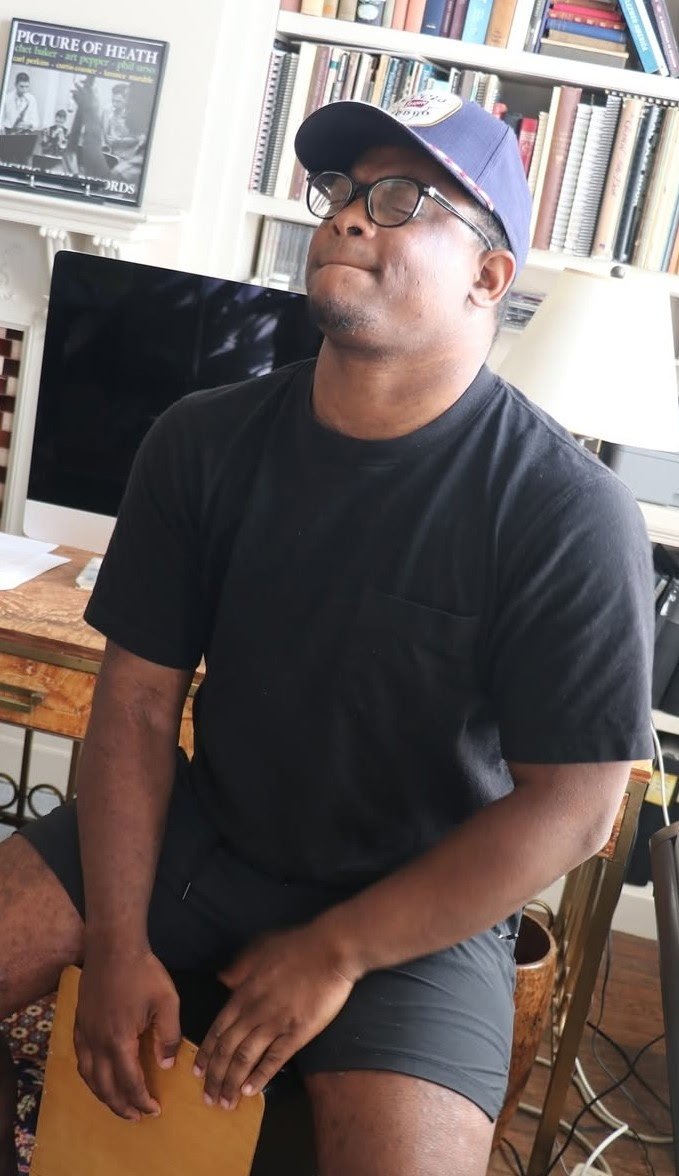
Matthew Jernigan is a Philadelphia-based musician and percussionist whose prime focus, in every musical setting, is using his voice to say something meaningful. Drawing on deep experience across disciplines, he brings a distinctive perspective to electronics, rhythm, and texture. He works within the jazz idiom while expanding beyond its customary norms of feel and harmony. Primarily he expresses himself from behind the drumset and conventional western percussion. Musicians seek him out for his interest in exploring the elasticity of time and his sensitivity to texture.
Matt is a long time friend and collaborator of Paul’s first appearing on the Ropeadope release “Hymn’s Vol. 1”. Matt offered overdubs to support the recordings made in Morocco.
Contact Paul Giess for inquiries and booking
484-653-7546